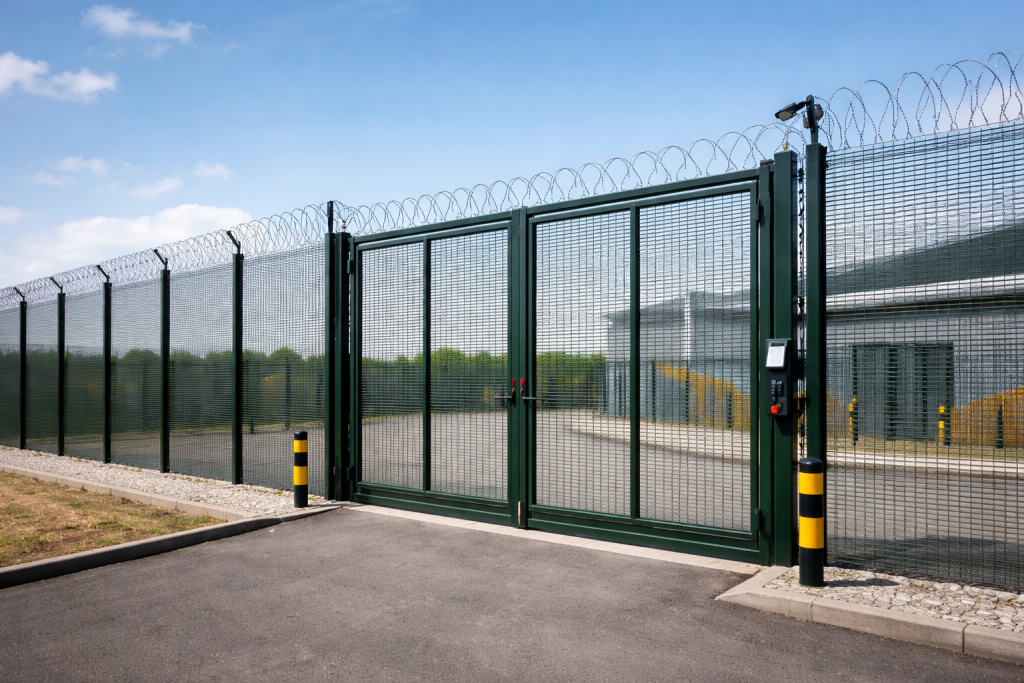
Guidance on High Security Fencing and Gates Following NPSA Catalogue Changes
Introduction
The National Protection Security Authority (NPSA) has recently announced that Security Fencing and Gates will be removed from the Catalogue of Security Equipment (CSE) as of January 2026. In response, the Association of Fencing Industries (AFI) are looking to provide guidance regarding available options, best practice standards, and the selection of high-performance products for high security fencing and gates.
Current Standards and Evolving Practices
As threats continue to evolve and commercial testing by other accredited test houses becomes more prevalent, the availability of up-to-date security data and test results – such as those certified by LPCB to LPS1175 – now enables the selection of certified security fences and gates from all currently available solutions. These products are specifically designed to provide robust protection for CNI and other high-security applications, supporting comprehensive risk mitigation as part of an overall security solution.
Ongoing NPSA Guidance
The NPSA continues to provide guidance on manual forced entry solutions. Good practice documentation, including downloadable resources, is available on their website to support organisations in selecting and implementing appropriate security measures.
Minimum Standards
Within the UK, BS 1722 remains the minimum standard for security fencing and gates and should be considered best practice when evaluating product performance and selection.
Specifying Security-Rated Fencing and Gates: Post-CSE Catalogue
Responsibility for asset and personnel protection rests with the client and it is therefore imperative to seek professional security advice and make informed decisions based on thorough risk assessments and established security principles. Ideally, this process should involve qualified, experienced security experts with a detailed understanding of the client’s specific requirements.
The selection process is rooted in conducting a detailed risk assessment and establishing operational requirement. As risk and criteria will vary between customers, product selection should be supported by certified products with recognised security certificates. These certificates should demonstrate that the product meets established performance standards, tested with designated toolsets and assessed according to a timed delay matrix. This enables the selection of a performance level that aligns with operational requirements using current data.
Recognised Security Standards for Fencing and Gates
- BS 1722: The minimum standard for security fencing and gates in the UK.
- LPS 1175 (Issue 8): Provides a standard matrix with certified products from manufacturers and suppliers.
- Secured by Design: Police-preferred guidance based on independent testing.
- Independent Testing and Design: Clients may choose to conduct their own testing based on their specific requirements. While this approach aligns with CNI philosophies, it is not recognised as an industry standard and is more suitable for self-mitigation and performance requirements.
Recommendations and Further Guidance
Engagement with industry resources and recognised security consultants—particularly those with CNI expertise—is strongly recommended. These professionals can provide direction to reputable bodies and resources, including:
- NPSA website (Manual Forced Entry Solutions guidance)
- Product manufacturers with LPS 1175-certified products
- Red Book Live (a commercial listing of certified products and suppliers for LPS 1175 security-rated fencing and gates)
- Register of Security Engineers and Specialists (RSES)
- Register of Chartered Security Professionals
Additionally, there are experienced installation companies capable of delivering installations to CNI standards. Due diligence should be exercised to ensure that security-rated products are installed according to tested standards and security principles. These companies typically employ security-vetted staff who are able to handle sensitive information and work within secure environments, with security clearance as a requirement.
The AFI and its industry representatives remain available to provide further guidance in light of the recent changes concerning security fencing and gates in the CSE Catalogue.